
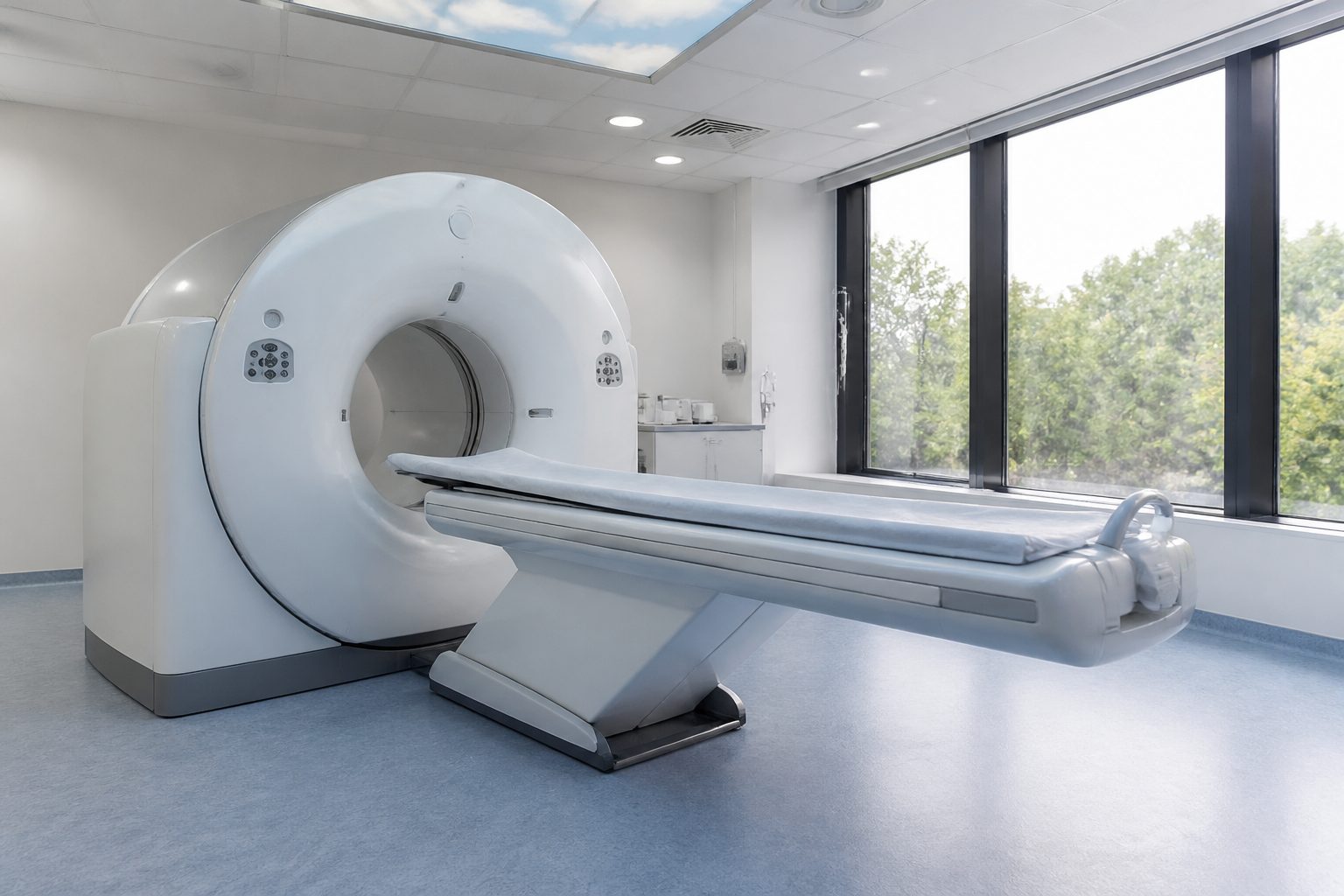
This guide is for patients and families comparing PET-CT scan costs in India, Bangladesh, and the UAE. Expect to pay from $260 in India to $1,600 in the UAE, depending on the centre, scan type, and inclusions.
Below you’ll find detailed cost breakdowns, what’s included in the price, hidden fees, how to choose a diagnostic centre, and planning tips for international and local patients.
What is a PET-CT scan and who needs it?
A PET-CT scan is an advanced medical imaging technique that merges two powerful technologies: positron emission tomography (PET) and computed tomography (CT). The PET component uses a radioactive tracer (often FDG) to reveal areas of increased metabolic activity, which is especially useful for identifying cancer cells, inflamed tissues, or certain neurological abnormalities. The CT component provides detailed anatomical images, helping doctors pinpoint the exact location and size of abnormalities detected by the PET scan. By combining these two modalities in one session, PET-CT offers a comprehensive view of both the structure and function of tissues and organs.
This scan is most commonly prescribed for cancer patients. Oncologists use PET-CT to diagnose new cancers, determine the stage (extent of spread), plan treatment, and monitor how well a tumour is responding to therapy. It is also valuable for detecting cancer recurrence after treatment. Beyond oncology, PET-CT scans are sometimes used by neurologists to evaluate unexplained neurological symptoms, diagnose certain types of dementia (like Alzheimer’s disease), or assess brain tumours. Cardiologists may request PET-CT scans to evaluate blood flow to the heart muscle or to distinguish between healthy and damaged tissue after a heart attack.
PET-CT is not a routine screening tool for healthy individuals. It is reserved for cases where other imaging methods, such as ultrasound, X-ray, or standard CT, have not provided sufficient information. Patients who may need a PET-CT scan include those with suspected or known cancer, patients whose cancer is being monitored for treatment response, individuals with persistent unexplained symptoms, or those with complex neurological or cardiac conditions. In all countries—India, Bangladesh, and the UAE—a PET-CT scan is usually ordered by a specialist after careful clinical evaluation, given its cost and the need for precise indications.
PET-CT scan cost comparison: India, Bangladesh, UAE
The cost of a PET-CT scan varies by country, city, hospital, and what is included. India generally offers the lowest prices, followed by Bangladesh, with the UAE at the higher end. Prices are influenced by factors such as the type of PET-CT scan, whether contrast is used, the brand of the scanner, and the reputation of the centre.
Below is a summary table comparing typical prices:
| Country | Typical cost range | Major cities/centres | What is included |
|---|---|---|---|
| India | $260-$550 (₹22,000-₹45,000) | Delhi, Mumbai, Bangalore, Chennai, Hyderabad | Scan, tracer, report, basic consultation |
| Bangladesh | $350-$700 (৳40,000-৳80,000) | Dhaka, Chittagong | Scan, tracer, report |
| UAE | $1,100-$1,600 (AED 4,000-6,000) | Dubai, Abu Dhabi | Scan, tracer, report, consultation |
What is included in the price
When you pay for a PET-CT scan in India, Bangladesh, or the UAE, the quoted price is generally for a standard package that covers the essential components of the procedure. This typically includes the use of a radiopharmaceutical tracer—most commonly FDG (fluorodeoxyglucose)—which is injected into the patient to highlight areas of metabolic activity in the body. The cost of the actual scan is included, whether it is for a whole-body assessment or a scan focused on a specific region, such as the brain, chest, or abdomen.
- Radiopharmaceutical tracer: The cost of the radioactive tracer (usually FDG) is a significant factor, as it is specially prepared for each patient and must be used within a short time frame.
- The scan procedure: The price includes the use of the PET-CT machine, which combines metabolic and anatomical imaging, as well as the time of trained technicians who operate the equipment and monitor the patient throughout.
- Radiologist’s report: After the scan, a board-certified radiologist or nuclear medicine specialist interprets the images and prepares a detailed report. This report is included in the quoted price.
- Basic pre-scan instructions and nursing support: Guidance on fasting, hydration, and medication adjustments, as well as nursing care during the procedure, are standard inclusions.
In some hospitals and diagnostic centres, particularly in major Indian cities like Delhi, Mumbai, or Bangalore, the price may also include a brief consultation with a specialist (such as an oncologist or nuclear medicine physician) to explain the results. However, in Bangladesh and the UAE, this consultation might be billed separately, especially in private facilities. The use of intravenous contrast dye—which can improve the clarity of certain images—may not be part of the base package and can add an extra charge. It is essential to ask for a detailed breakdown of what is included in your quoted price, as inclusions can vary between public and private hospitals, and across countries. Confirming these details in advance helps you avoid surprise costs and ensures you receive all necessary services for your diagnostic needs.
What is not included and potential hidden costs
While the headline price for a PET-CT scan might seem comprehensive, there are several additional expenses that patients in India, Bangladesh, or the UAE frequently encounter. These costs can significantly increase your total outlay, especially in private or international hospitals. Understanding what is typically excluded helps you budget more accurately and avoid last-minute surprises at billing.
- Specialist consultations: A meeting with an oncologist, nuclear medicine physician, or other specialist before or after the scan may not be included. This can be a substantial extra fee, especially in private centres or if multiple consultations are required.
- Additional blood tests: Many centres require tests such as kidney function, blood sugar (especially for diabetic patients), or other pre-procedure blood work to ensure safety. These are often billed separately from the scan package.
- Contrast material: If your doctor requests a contrast-enhanced PET-CT for better imaging of certain organs or tumours, the cost of the contrast agent and the additional monitoring required may be extra. This is particularly common in the UAE and high-end Indian hospitals.
- Repeat scans or extra body regions: If the scan must be repeated due to technical issues, or if additional body areas need to be imaged beyond the initially agreed region, these will incur further charges.
- Physical copies of images: While digital reports are usually included, obtaining CD/DVD or printed film copies for personal records or for other doctors may involve an additional fee.
- Hospital registration and administration fees: Some larger private hospitals, especially in the UAE and metropolitan areas in India, charge a one-time registration or administrative fee for new patients.
- Follow-up appointments: If you need to discuss your results in detail or require further explanation, follow-up consultations are rarely included in the initial scan price.
For international patients, there may be further costs such as translation services for reports, assistance with medical visa applications, or even airport transfers arranged by the hospital. These are particularly relevant in the UAE and for medical tourists visiting India. Always ask your chosen centre for a comprehensive written estimate before your appointment, and clarify which services are included and which are not. This is especially important when comparing prices across different countries or between public and private providers, as billing practices can vary widely.
Best diagnostic centres and hospitals for PET-CT scans
Choosing a reputable centre is crucial for accurate results and patient safety. In India, top private hospitals in major cities (such as Apollo Hospitals, Fortis, Max Healthcare, Tata Memorial, and Medanta) offer PET-CT scans with experienced nuclear medicine teams. Many are accredited by NABH or JCI. In Bangladesh, the National Institute of Nuclear Medicine and Allied Sciences (NINMAS) in Dhaka and several private diagnostic centres provide PET-CT scans. In the UAE, leading hospitals such as Cleveland Clinic Abu Dhabi, Mediclinic, and American Hospital Dubai have advanced imaging suites and international standards.
For patients, factors such as accreditation, the experience of the nuclear medicine team, scanner technology (digital PET-CT is newer), and clarity about costs should weigh heavily in your decision.
How to choose a PET-CT centre
When selecting where to get your PET-CT scan, consider:
- Accreditation: Look for NABH, JCI, or equivalent recognition.
- Specialist expertise: Centres with dedicated nuclear medicine physicians and radiologists.
- Scanner technology: Newer PET-CT scanners may offer better image quality and lower radiation dose.
- Cost transparency: Ensure you receive a written breakdown of costs, including all potential extras.
- Location: For repeat scans or follow-up, proximity can be important. Major cities generally offer more advanced options.
- International patient services: If travelling from abroad, check if the centre offers visa assistance, interpreter services, and logistical support.
Ask for a copy of your scan and report, and confirm how long it will take to receive results. Most centres can provide digital access within 24-48 hours.
How to save safely on PET-CT scans
Reducing the cost of a PET-CT scan without sacrificing the quality of care is possible with careful planning and research. Here are practical steps and country-specific tips to help you save money while ensuring you receive accurate results and professional service:
- Compare prices across accredited centres: In India, competition among diagnostic centres in major cities like Delhi, Mumbai, and Bangalore means prices can vary by 20-40%. Use hospital websites or third-party healthcare platforms to compare rates, but always check the centre’s accreditation with bodies like NABH (India), JCI (UAE), or DGHS (Bangladesh).
- Ask about all-inclusive packages: Some hospitals offer bundled deals that include the scan, consultation, and standard blood tests at a discounted rate. This is common in India’s larger private hospitals and some medical tourism providers in the UAE. Request a full list of inclusions and exclusions to avoid hidden charges.
- Choose cities with more competition: In India, metropolitan areas have more facilities and lower prices due to higher competition. In Bangladesh, Dhaka offers more options and better rates than smaller cities. In the UAE, Dubai and Abu Dhabi have the most competitive pricing.
- Look for self-pay discounts: Many centres provide discounts for upfront payment, especially for patients without insurance or those referred by partner hospitals. Inquire about these options when booking.
- Check insurance coverage: If you have private health insurance, ask if PET-CT scans are covered and understand the documentation required for reimbursement. In India and the UAE, some insurers offer cashless services, while in Bangladesh, reimbursement is more common. Clarify approval processes and whether pre-authorization is needed.
While seeking savings, never compromise on the experience and credentials of the medical team or the quality of the PET-CT scanner. Outdated equipment or poorly trained staff can lead to inaccurate results, which may cost more in the long run. Always verify the centre’s certifications, read patient reviews, and, if possible, consult your referring doctor for recommendations. Remember, a balance between cost and quality is crucial for your health and peace of mind.
Preparing for your PET-CT scan: what to expect
Proper preparation is crucial to ensure the accuracy and safety of your PET-CT scan. Most centres in India, Bangladesh, and the UAE provide detailed instructions tailored to your health status and the specific reason for the scan. Typically, you will be asked to fast for 4-6 hours before the appointment—this means no food, only water is allowed. Fasting helps reduce blood sugar levels, which is important because high glucose can interfere with the uptake of the radiotracer and affect scan results. If you have diabetes or other metabolic conditions, inform the centre in advance so they can adjust your preparation and medication schedule accordingly.
On the day of the scan, wear comfortable, loose-fitting clothing without metal parts (such as zippers or buttons), as metal can distort the images. You may be asked to remove jewellery, belts, or hearing aids. Bring any previous imaging reports or medical records, as these help the radiologist compare findings and make a more accurate assessment. Upon arrival, you will receive the radiotracer injection, followed by a waiting period (typically 45-90 minutes) to allow the tracer to circulate in your body. The scanning process itself takes about 30-45 minutes, but the entire visit may last 2-3 hours including preparation and post-scan monitoring.
After the scan, you can usually eat and drink as normal and resume regular activities. The radiologist’s report is often ready within 24-48 hours in India and the UAE, though it may take a bit longer in Bangladesh. If you are travelling from another city or country, ask in advance about the expected turnaround time for results and whether digital copies can be securely sent to your referring doctor. Some centres offer online portals or email delivery for convenience. Understanding the preparation process and post-scan expectations will help you feel more confident and ensure you get the most accurate diagnostic information from your PET-CT scan.
Frequently asked questions
How long does a PET-CT scan take from start to finish?
The entire process takes about 2-3 hours. This includes registration, tracer injection, a waiting period for the tracer to circulate (usually 45-60 minutes), and the actual scan (20-40 minutes). Some centres may require longer if additional imaging is needed.
Is a PET-CT scan safe?
PET-CT scans involve low levels of radiation and are generally considered safe when medically indicated. The radiopharmaceutical used leaves the body within a day. Pregnant or breastfeeding women should inform their doctor before scheduling the scan.
Will my insurance cover the cost of a PET-CT scan?
Coverage varies by insurance plan and country. In India and Bangladesh, some private insurance policies cover PET-CT scans when prescribed for cancer diagnosis or monitoring. In the UAE, private insurance may cover the scan if medically necessary. Always confirm with your insurer in advance.
Can I get a PET-CT scan as part of a routine health check-up?
PET-CT scans are not recommended for routine health screening due to radiation exposure and cost. They are reserved for specific medical indications, such as cancer evaluation or certain neurological conditions, and require a doctor’s referral.
How soon will I get my PET-CT scan results?
Most centres provide a preliminary report within 24-48 hours. Some offer same-day reporting for urgent cases. Ask if you will receive both a written report and electronic images, and clarify the process for sharing results with your referring doctor.
Related guides
Disclaimer: The prices and information in this guide are indicative and can vary widely by hospital, location, and individual patient needs. Always obtain a written quote and consult a qualified doctor for personalised advice before scheduling a PET-CT scan.